Why Resting Dough Makes It Easier to Handle
Resting dough gives flour time to absorb moisture, making it easier to shape and less prone to tearing before it reaches the pan.
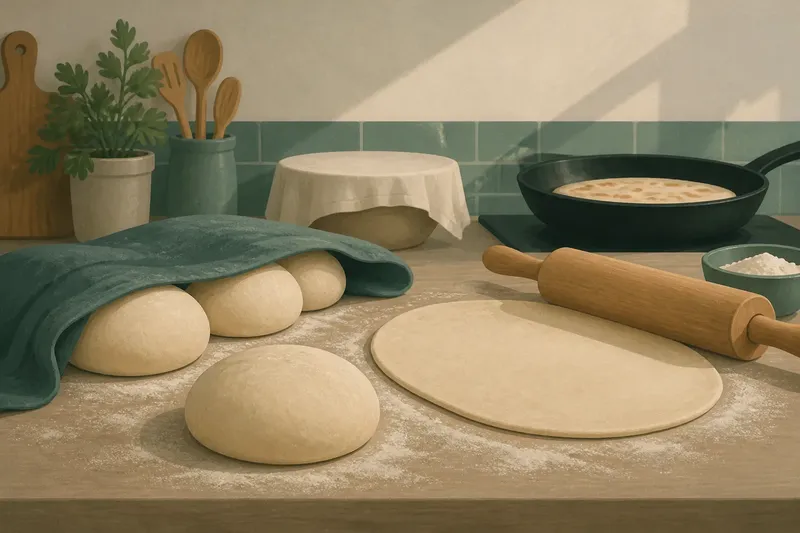
You’ve mixed flour and water for tortillas, pizza, or a quick flatbread, but the dough keeps springing back under your hands. A short rest often changes how that dough feels before it reaches the pan. Resting dough gives flour time to absorb moisture and lets the dough relax, though it cannot repair every mixing or ingredient problem.
What changes in dough while it rests?
Flour does not absorb water instantly. Right after mixing, some parts of the dough may feel wet while others remain dry or rough. During a pause, moisture has time to spread through the flour, softening dry patches and making the dough more even.
Mixing also develops gluten, a network of proteins that helps dough stretch and hold together. Kneading or vigorous mixing tightens that network. Given a little time without handling, the dough can relax, so it may stretch with less resistance. This is why a ball that seemed stubborn at first can become easier to roll.
The effect is practical, not magical. Resting can improve consistency and flexibility, but it does not add water, remove excess flour, or change a dough’s basic recipe. If the mixture is genuinely too dry or too wet, a pause alone won’t bring it into balance.
How long should dough rest before shaping?
The useful resting time depends on the dough and the recipe. A simple flour-and-water dough may benefit from a brief pause before rolling. Enriched doughs containing ingredients such as butter or eggs may have different needs, as do yeast doughs that are resting for fermentation rather than merely to absorb moisture.
Follow the recipe’s timing when it provides one. If it doesn’t, cover the dough so its surface does not dry out, then check its feel before proceeding. It should generally seem more cohesive and less resistant than it did immediately after mixing. Add another short pause if it still snaps back while being rolled.
Keep the purpose of the pause in mind. A dough resting on the counter to relax is not automatically undergoing the same process as yeast dough left to rise. Temperature and ingredients affect how dough changes, so don’t substitute one kind of rest for another without considering the recipe.
Should dough be covered or refrigerated while it rests?
Cover dough during a room-temperature rest with an inverted bowl, reusable cover, or clean, slightly damp towel. The goal is to keep the surface from drying and forming a skin, which can make rolling uneven and leave dry edges in the finished dough.
Refrigeration is useful when the recipe calls for chilling, when the dough contains ingredients that need cold storage, or when you need to pause preparation. But cold dough can feel firmer and less flexible than dough at room temperature. If it resists shaping after chilling, give it time to become workable again rather than forcing it thin.
Use the recipe’s directions for storage and food handling, especially when dough contains perishable ingredients. For a basic dough resting briefly before shaping, covering it well is usually the main concern.
Why does rested dough roll out more easily?
Two changes help. Moisture becomes more evenly distributed, so the dough is less likely to crack at dry spots. Meanwhile, the gluten network has time to relax, reducing the elastic pull that makes a rolled circle shrink back toward its original shape.
Imagine you mix flour and water for a batch of skillet flatbreads and the first ball tears at the edge when you press it. You cover the remaining dough and let it pause, then roll another piece. The second piece may stretch more smoothly and hold its shape better; that is the observable benefit to look for, not a promise that every piece will be perfect.
Use a light touch with the rolling pin, and turn the dough as you work. A rest can make shaping easier, but pressing hard or adding a heavy dusting of flour can still alter the texture and make the dough less supple.
What can resting dough not fix?
A rest cannot correct an inaccurate ratio of flour to liquid, make a poorly mixed dough uniform, or replace kneading when a recipe depends on it. It also cannot make every dough stretchy. Shortcrust pastry, for instance, is handled to limit gluten development, while bread dough often depends on gluten for its structure.
If dough remains crumbly after resting, it may need more moisture, but add it cautiously and follow the recipe’s method. If it is sticky, extra flour may help during shaping, yet too much can make the result tough. A long rest is not a reliable substitute for adjusting an obvious imbalance.
Resting also does not cook dough or make it safe to eat raw. Keep raw dough away from ready-to-eat foods, and cook it as the recipe directs.
Which dough questions come up most often?
Can I skip resting dough?
Sometimes, but the dough may resist rolling or tear more readily, especially if it was mixed recently. If the recipe specifies a rest, treat it as part of the method rather than an optional wait.
Why does dough shrink after I roll it?
Elastic gluten can pull the dough back after it has been stretched. Cover it and let it rest again before continuing, rather than repeatedly forcing it to the desired size.
Does resting dough make it rise?
Not by itself. Dough rises when a leavening process produces gas, such as yeast fermentation; a rest intended for moisture absorption or relaxation does not necessarily produce that change.
Can dough rest overnight?
Only when the recipe and its ingredients support that timing and storage method. An overnight pause can involve chilling, fermentation, or both, so follow the recipe rather than treating it as an ordinary brief rest.
How can you tell when dough is ready to shape?
Check whether the dough feels more even and yields more readily under your fingers. When rolling, notice whether it stretches without immediately springing back or splitting at the edges. Those signs are more useful than relying on a fixed clock time for every recipe.
For dough questions, remember the central point: resting dough gives flour time to absorb moisture and allows a mixed dough to relax. Cover it, give it the pause the recipe calls for, and judge the result by how it handles. The pan can take it from there.