The Recipe Myth: More Steps Do Not Mean More Care
The recipe myth that more steps mean more care can make cooking harder. Learn to spot a dish’s essential decisions and simplify without losing its character.
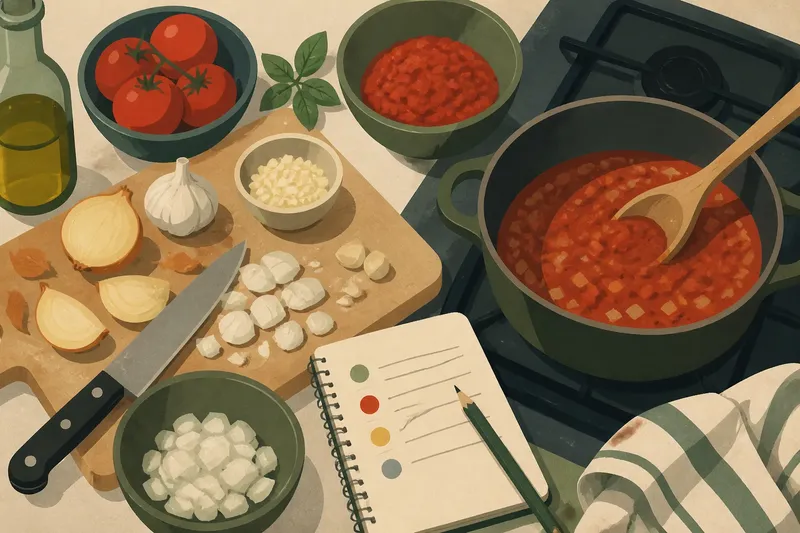
You’re halfway through a recipe for tomato sauce, with a cutting board crowded by bowls and a pan waiting on the stove. The recipe myth that more steps mean more care can turn a straightforward supper into a small production. A careful cook does not need to perform every flourish on the page. The useful task is to understand what each step contributes, then keep the decisions that shape the dish.
That does not mean treating every recipe as disposable or skipping steps at random. It means reading for purpose. A step that builds flavor, controls texture, or protects an ingredient earns its place. One that only adds another vessel or pause may be optional. Work through the method before you start, and you can make those distinctions calmly rather than while dinner is underway.
Read the recipe for its essential decisions
Before gathering ingredients, read the recipe once from beginning to end. Look past the verbs—chop, stir, transfer, cover—and ask what the cook is trying to accomplish. A sequence that seems long may contain only a few meaningful decisions: how finely to cut an ingredient, how much color to develop, when to add a liquid, and how to tell when the dish is ready.
On a second pass, mark each instruction according to its purpose. You might write a short note beside the recipe, or simply keep the categories in mind:
- Flavor-building: browning onions, blooming spices in fat, or reducing wine until its raw aroma softens.
- Texture-setting: folding beaten egg whites into a batter or adding a crunchy topping just before serving.
- Timing and protection: covering a pan so food cooks through without the surface drying out, or adding a delicate ingredient near the end.
- Convenience or presentation: transferring ingredients between bowls, straining a sauce for a very smooth finish, or shaping portions uniformly.
The last category is not automatically needless. A smooth sauce may be the point, and even portions may matter for a shared platter. The question is whether that result matters to the dish you want to serve. A recipe is a set of choices, not a measure of how much effort you owe it.
Keep steps that change flavor, texture, or timing
Some steps look like extra ceremony because their effect is not immediate. Browning meat before simmering it creates a different base than cooking it directly in liquid. Toasting spices in oil gives them a chance to release their aroma into the fat, which then carries that flavor through the dish. These actions are worth keeping when the recipe relies on the flavor they build.
Other instructions manage texture. Tossing vegetables partway through roasting encourages more even contact with the hot pan. Resting a cooked frittata before slicing lets its tender center settle enough to serve neatly. Skipping either may still produce food, but it changes what the cook is aiming for.
Timing instructions deserve the same attention. Adding lemon juice early to a long-cooking stew can give a different impression from stirring it in at the end, when its brightness remains distinct. A recipe that separates ingredients by cooking time may be preventing soft items from turning mushy while firm ones finish. If you remove a step, preserve the reason behind it when you can.
Say you are making a basic tomato sauce and the recipe calls for softening onion in olive oil, adding garlic briefly, then stirring in tomatoes. It also asks you to move the garlic to a small dish before adding the tomatoes, then return it later. If the garlic is already fragrant but not browned, and the tomatoes are ready to go in, you may be able to add them directly to the same pan and keep cooking. The observable goal is still a sauce with softened onion and aromatic garlic, not a collection of extra bowls. If the recipe instead asks you to remove garlic that is browning quickly, that pause serves a clearer purpose: it stops the garlic from becoming bitter while the onion continues to cook.
Identify what can be combined or left out
Once the essential decisions are clear, look for steps that can be combined without changing them. If a recipe has you measure salt into a dish before adding it to a pot, you can often measure it directly over the pot if you can control the amount. If chopped vegetables go into the same pan one after another, a large bowl may be unnecessary unless the first ingredients need to remain separate.
Be cautious about combining steps that rely on different timing. Garlic can brown faster than onion; adding them together from the start may make the garlic bitter before the onion softens. Instead, keep the order and remove the separate holding dish. Likewise, combining ingredients in one bowl is convenient only if it does not erase a useful distinction, such as a dry mixture that should be stirred separately before meeting wet ingredients.
Presentation steps are often the easiest to adapt. A recipe may call for peeled tomatoes, a finely strained soup, or carefully shaped dumplings because it is aiming for a particular finish. If you prefer a rustic sauce, you might leave soft tomato skins in place. If the soup is for a quick lunch, you may not need to strain it. Decide what texture and appearance you actually want before removing the work that creates them.
Take extra care with instructions that affect food safety, preservation, or a specific product’s use. For those, follow the recipe, package directions, manufacturer’s instructions, or local guidance as applicable. When the right choice depends on a safety question, ask a qualified professional rather than improvising.
Make a simpler method work in your kitchen
When adapting a recipe, change one kind of thing at a time. Keep the ingredient amounts and cooking method steady while combining bowls, for example. Or leave out an optional garnish while following the cooking sequence as written. If you alter the heat, timing, ingredient amounts, and pan all at once, it becomes harder to tell which choice shaped the result.
Use your senses to check whether the recipe’s purpose is being met. Onions intended to soften should look tender and lose their raw sharpness, rather than remain pale and crunchy. A reduction should taste less watery and more concentrated. A browned ingredient should show color and smell savory, not burnt. These cues are more useful than treating every minute in a recipe as a fixed promise, since pans and ingredients vary.
It helps to leave yourself a brief note after cooking. Write down the step you combined or omitted and what you noticed: “Used one bowl for the dry ingredients; batter mixed evenly,” or “Skipped straining; sauce had a chunkier texture.” That record turns a one-time shortcut into a deliberate choice next time. It also makes clear when a step was doing work you value.
For a first attempt at an unfamiliar dish, follow the method closely enough to learn its intended character. Once you know what the steps are meant to do, adaptation becomes more informed. A recipe’s author may have a particular texture, flavor, or presentation in mind; your version can differ, but it should differ by choice rather than by accident.
Which recipe steps are safe to skip?
Can I skip a step that only adds another bowl?
Often, if the ingredients can be added in the same order and the bowl does not keep them separate for a reason. Keep the timing, and combine the containers rather than combining ingredients that cook at different speeds.
Should I skip a recipe’s resting or cooling time?
Not without asking what the pause does. It may help a dish set, make it easier to handle, or let heat distribute more evenly, so skipping it can affect texture or serving.
Can I leave out a garnish or finishing touch?
Usually, if you are comfortable with the flavor or appearance changing. A garnish may add freshness, crunch, acidity, or color, so consider whether that contribution matters before omitting it.
What if I cannot tell why a step is there?
Follow it the first time, especially if it affects cooking order, texture, or safety. Then note what you observe and decide whether a later version can be simplified without losing the result you want.
Keep care in the decisions, not the number of steps
Careful cooking is visible in the choices that suit the ingredients: giving onions time to soften, adding a fresh accent when it will stay lively, and stopping a sauce when its texture feels right. A long method can be thoughtful, but length alone does not make it so. The recipe myth that more steps mean more care fades once you can name what each action contributes.
Next time a recipe fills the counter with bowls, pause before setting out every dish. Keep the steps that build the flavor and texture you want, preserve the order that helps ingredients cook well, and simplify the rest with intention. A useful method leaves you not only with dinner, but with a clearer sense of why it works.