Before the Home Freezer, the Icebox Had Its Day
The icebox brought cold storage into domestic kitchens; see how its design shaped shopping, meal timing, and the daily work of keeping food cool.
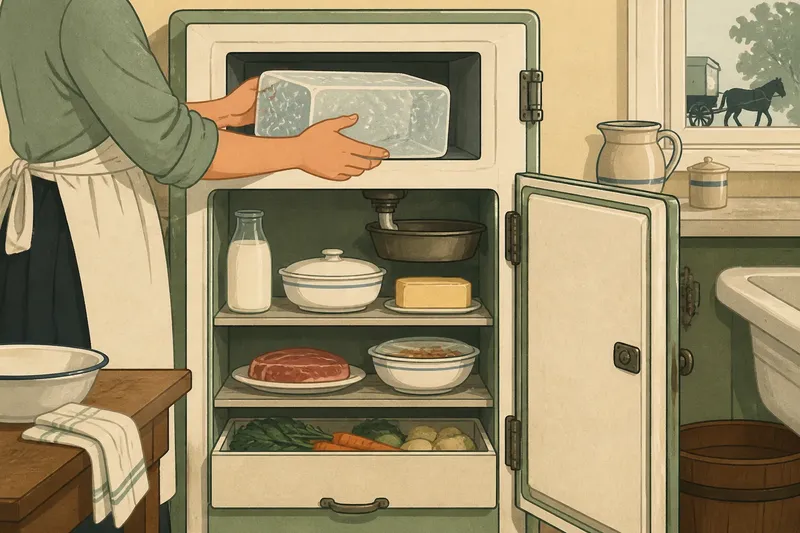
On a warm morning, a household’s block of ice is shrinking in the kitchen icebox while a pot of milk waits on the lower shelf. The icebox brought cold storage into domestic kitchens, but it did not work like a freezer: its design made cool food possible through a steady routine of buying, arranging, draining, and using ingredients in time.
Imagine a clearly hypothetical household in a town where an ice wagon makes regular rounds. The family has just replaced a wooden cupboard with an insulated icebox. Following its daily rhythm—from delivery to supper—shows how the appliance changed kitchen habits without removing the need for planning.
The icebox made cold a household service
Before electric refrigeration became common in homes, an icebox offered a contained place to keep food cool. Its insulated cabinet held a large block of ice, usually set in a compartment near the top. As the ice melted, chilled air moved down through the storage space, while warmer air rose toward the ice compartment. A pan or drain collected the meltwater.
The ice itself came from outside the kitchen. In some places, natural ice was cut during cold weather, stored, and delivered later; elsewhere, commercially made ice supplied the trade. A household depended on a regular supply, so cold storage involved more than owning a cabinet. Someone had to notice when the ice was running low and arrange for another block.
In the imagined household, the ice wagon’s arrival becomes part of the morning’s work. The person who answers the door clears space for the new block, then checks the drip pan. The new appliance has reduced the need to keep perishable food in the coolest corner of a pantry, but it has added a small, recurring job to the day.
Shelves and compartments turned temperature into a routine
An icebox’s interior made people think carefully about placement. The coldest area was near the ice, while the lower sections could be less cold. Shelves, drawers, and sometimes separate compartments divided food by type or use. A household might keep milk, butter, leftovers, and other perishables inside, while bread, dry goods, and much produce remained elsewhere.
Those divisions were practical, not simply tidy. A covered dish could keep its contents from picking up odors or spilling. A bottle needed to stand securely. Food placed where it could be reached easily was more likely to enter the next meal before it spoiled. The icebox turned storage into a small map of household priorities.
In the imagined kitchen, the family puts milk in a cool, accessible spot and sets a covered bowl of leftovers beside it. A vegetable drawer holds items intended for the coming meal, not the whole pantry’s worth of produce. That arrangement makes supper easier to assemble, while the family still checks the food and the condition of the ice rather than assuming every corner stays equally cold.
Shopping and cooking followed the ice supply
An icebox could extend the time a household had to use food, but it did not make storage indefinite. The block gradually melted, and the cabinet’s cooling depended on its insulation, how often its door opened, and where food sat. Families still had reason to buy perishables in manageable amounts and plan meals around what needed attention first.
In the hypothetical household, a fresh delivery of ice prompts a practical choice: the family buys milk and a little meat for meals soon to come, rather than treating the cabinet as a place to stock up without limit. When the ice has dwindled, they use the most perishable items promptly. The result is not a modern inventory system; it is a closer connection between errands, the ice wagon’s schedule, and the menu.
This is one reason the icebox shaped cooking as well as storage. A cook could prepare some dishes ahead and keep them cool, yet still had to consider how long they would remain suitable. Leftovers became useful ingredients for another meal, but they needed a place and a timely plan. The appliance widened the household’s options while keeping attention on freshness.
The daily care mattered as much as the cabinet
Keeping an icebox usable meant tending to water, cleanliness, and airflow. Meltwater had to be emptied or carried away through a drain. Shelves and containers needed cleaning, and food had to be arranged so air could circulate. A forgotten pan could overflow; a crowded cabinet could make it harder to find food or keep the interior evenly cool.
In the imagined household, someone discovers the drip pan is nearly full while reaching for the milk. They empty it, wipe the shelf, and move a covered dish so it does not block the space around other food. The visible result is a cleaner cabinet and a clearer view of what remains for supper. The lesson is that the icebox’s convenience depended on routine attention, not on the box alone.
Labels and construction varied, so a particular cabinet’s care and drainage arrangements depended on its maker’s instructions. The broader domestic pattern, though, is easy to picture: the icebox was furniture, food storage, and a recurring chore in one object.
What did an icebox change in the kitchen?
How did an icebox keep food cool?
A block of ice chilled the insulated cabinet, and cool air moved through its storage area. Meltwater collected in a pan or passed through a drain, depending on the design.
Where did households get the ice?
People could receive ice from a local delivery service, with supply coming from natural ice or commercial production depending on place and period. The household needed to arrange replenishment as the block melted.
Could an icebox freeze food?
An icebox was designed for cool storage, not for the separate frozen-food compartment familiar from later appliances. Its interior conditions varied by location within the cabinet and by how much ice remained.
Why did its design shape meal planning?
Limited space, uneven coolness, and a melting block encouraged households to place food deliberately and use perishables in a sensible order. Shopping and cooking stayed tied to the ice supply and the cabinet’s condition.
The icebox changed the meaning of kitchen convenience
In the imagined household, the day ends with a cold supper ingredient still at hand, a drained pan, and a note to arrange the next ice delivery. That result captures the icebox’s domestic bargain: it brought cold storage into reach, but its usefulness rested on a chain of small decisions shared between the kitchen and the world outside it.
Remembering the icebox makes the history of refrigeration feel less like a simple march from old appliance to new. The cabinet reshaped where food could wait and how a cook planned the day, while the ice wagon, the storage shelves, and household labor remained part of the system. The useful detail to notice is the rhythm: cold entered the home as a delivered material, and meals were organized around keeping it there.