A Weeknight Supper Built Around One Shared Dish
A weeknight supper built around one shared dish keeps a busy evening relaxed: choose a forgiving centerpiece, add easy sides, and make serving simple.
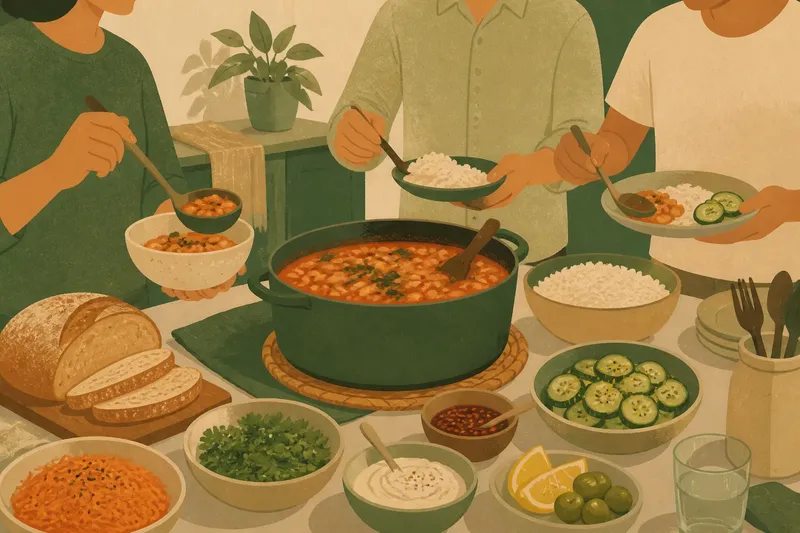
The pot of beans is still warm when everyone drifts into the kitchen, and there is no rush to plate four separate dinners. A weeknight supper built around one shared dish makes that kind of evening easier to arrange: choose a centerpiece that can wait a little, add a few low-effort accompaniments, and let people serve themselves.
The idea is not to make a feast or hide the fact that it is Tuesday. It is to give the meal one clear center. When the main dish is ready in a single pot, roasting pan, or serving bowl, the rest of supper can be modest. Bread, a crisp vegetable, or a bowl of rice can fill out the table without asking for another round of complicated cooking.
Let the shared dish set the pace
A useful centerpiece suits the actual shape of the evening. If everyone arrives at different times, a stew or braise can stay pleasant while people settle in. If dinner needs to come together quickly once the household is home, a sheet-pan meal or a large skillet of pasta may fit better. Think about when the food will be ready, how long it can wait, and whether it needs active attention at the last moment.
Choose a dish that serves easily from its cooking vessel or transfers without fuss. A bean stew, vegetable curry, baked pasta, chicken and vegetables from one roasting pan, or a pot of lentils can all work. The right choice depends less on impressiveness than on whether it can be placed in the middle of the table and shared without a host managing every portion.
Favor a main dish with a little flexibility. A thick soup can sit briefly while people wash their hands. A tray of roasted vegetables can be brought out when the table is ready. Delicate fried foods, by contrast, are best eaten promptly and may turn a casual meal into a timed operation. Match the centerpiece to the amount of attention you want to give dinner.
Choose one anchor before adding sides
Start by deciding what the main dish already provides. A pot of chickpeas with tomatoes may bring protein, softness, and sauce, but it may need bread or rice to make the meal feel complete. A tray of potatoes and sausages may be filling but benefit from something fresh and sharp. This quick reading of the dish keeps the accompaniments useful instead of multiplying them out of habit.
Then pick a single anchor for the table: rice, bread, noodles, potatoes, or another simple base that suits the main. It should be familiar and low-attention. Rice can cook while a curry simmers; crusty bread can be sliced and set out beside soup; boiled potatoes can be dressed with olive oil and salt. If the centerpiece already contains pasta or potatoes, skip the extra starch and choose a vegetable or condiment instead.
Imagine you get home with a pot of tomato-braised white beans already planned, but the evening is crowded. You warm the beans while cooking rice, then put out sliced cucumber with lemon and a jar of chili crisp. The expected result is a meal with something warm and filling, a cool contrast, and an optional bright or spicy finish, without turning the sides into separate projects.
Keep accompaniments easy to assemble
One or two additions are usually enough. A raw vegetable salad gives a hot, soft dish some crunch. A bowl of steamed greens can bring freshness with little extra preparation. Pickles, olives, yogurt, grated cheese, herbs, lemon wedges, or a spoonful of mustard can add contrast without requiring another cooked recipe.
Look for jobs the sides can do, rather than assigning each one a formal course. A side might cool a spicy dish, catch its sauce, add crunch, or offer a brighter flavor. A cabbage slaw dressed with vinegar can cut through rich baked pasta. Yogurt can soften a strongly spiced stew. Warm flatbread can turn a saucy dish into something people can scoop.
Use what is already available, but give it a small, deliberate role. A bag of carrots can become rough sticks for dipping, or be grated with lemon and salt. A jar of roasted peppers can be drained and served beside lentils. Frozen peas can be stirred into rice near the end of cooking. The aim is not to disguise convenience; it is to make the whole table feel considered without demanding much more work.
Make the table ready for self-serving
Serving becomes calmer when people can see what they need. Put the centerpiece in a stable dish with a large spoon, and set the anchor nearby with its own utensil. Keep small additions in bowls that are easy to reach. A trivet protects the table from a hot pot, while a folded kitchen towel can help carry a warm dish from counter to table.
Set out plates, cutlery, water, and napkins before the main dish is finished. This small bit of preparation prevents a ready meal from waiting while someone searches a drawer. If space is tight, leave the hot dish on the stovetop and invite people to serve there; shared eating does not require every item to be arranged in the center of the table.
Think about how the food moves. Keep bread beside the dish it accompanies, and place a serving spoon where it will not be buried beneath a platter. Put optional toppings together so diners can choose them without interrupting someone who is serving. These details matter most when the meal is meant to feel informal: the easier the route from dish to plate, the less the cook has to direct.
What makes a shared supper work on a busy night?
What kind of dish can wait before serving?
Soups, stews, braises, and many bean dishes are forgiving for a short pause because they remain together in one vessel. Keep food at an appropriate temperature and follow the recipe and food-safety guidance for storage and serving.
How many accompaniments should I make?
Begin with one filling anchor and one contrasting addition, then add another only if the centerpiece clearly needs it. A bowl of rice and a quick cucumber salad can be plenty alongside a saucy main.
How can I include different appetites?
Offer sauces, herbs, cheese, or chili separately when they are easy to set out. People can adjust their plates without requiring a second main dish or a custom order from the cook.
What if someone arrives late?
Choose a centerpiece that can be held safely and served again without losing its appeal, and keep any crisp or delicate sides separate. A latecomer can assemble a plate when they arrive rather than making the whole meal wait.
Keep the meal relaxed without making it careless
Shared serving is flexible, but it still helps to notice how the food will be handled. Use a clean serving spoon for the main dish and keep raw ingredients separate from ready-to-eat food. For storage, reheating, and safe holding, follow the food’s label, recipe directions, and applicable food-safety guidance. That is especially useful when a meal includes meat, seafood, dairy, or leftovers.
Leave room for ordinary differences in appetite. A shared centerpiece can be the same for everyone while the plate changes: someone may want extra rice, another may reach for more salad, and someone else may add a generous spoonful of sauce. Keeping optional additions separate makes that easy without making the cook responsible for assembling every plate.
Do not mistake a simple table for an unfinished one. A main dish, a useful accompaniment, and something that brings contrast can feel complete when they work together. A little care in choosing the vessel, setting out utensils, and deciding what can be prepared ahead makes that simplicity visible.
A weeknight supper built around one shared dish is most useful when it lowers the number of decisions still waiting at dinner time. Pick a centerpiece that suits the evening, give it one dependable partner, and let the table do the remaining work. Then keep the serving spoon within reach and sit down while the food is still warm.